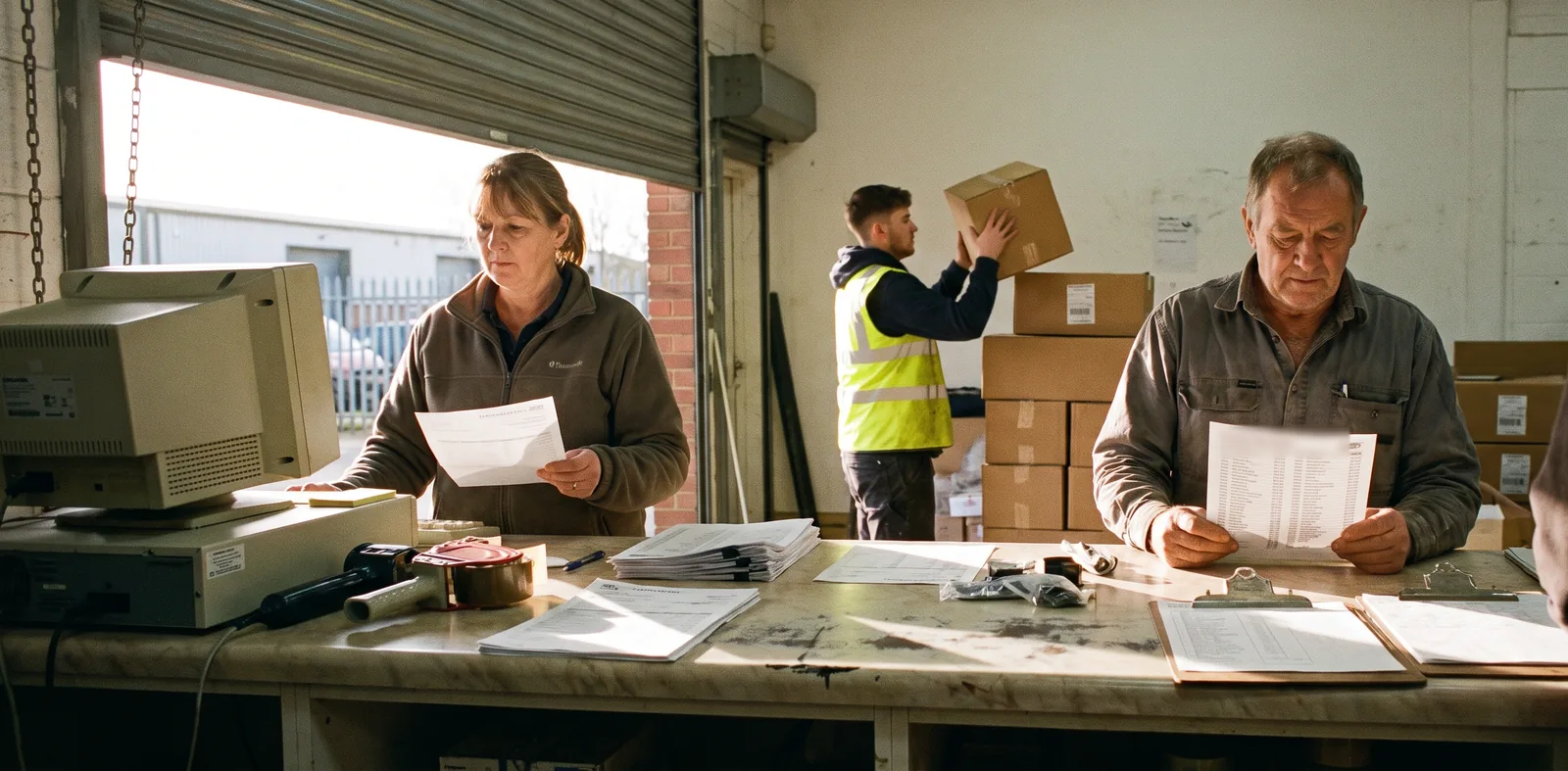
Staff at the trade counter of a distribution business read order sheets while a worker stacks boxes behind them

Buyers & Investors

Diligence for buyers, or a partner from the letter of intent to Day 100.

For searchers, sponsors, family offices, platforms and owners doing add-ons, buying businesses earning roughly $500K to $5M of EBITDA. Hire us for independent diligence and we prove the earnings, read the operation and hand the deal back. Or partner with us, and the same two people build the capital stack, run the diligence and stay in the seats after you close.

Two ways in

Hire the diligence, or partner on the deal.

Fixed fee, buy-side

Independent diligence

You hold the deal. We test the seller’s numbers against the bank and the tax return, read the seats the earnings run through, and show the add-backs we rejected beside the accepted ones.

Indiana, and about four hours around it

Acquisition Partnership

You run the company. We evaluate the deal, build the capital stack with no fee from any lender, run the diligence, and take the CFO and operating partner seats from day one.

By buyer type

The report a buyer needs depends on who is buying.

Each buyer prices something different, so the diligence has to prove something different.

What each buyer type has to prove

Five buyers · one report each

The buyer, and what they price

What their diligence must prove

The LIMESTONE report

Individual with an SBA 7(a) loanPrices debt coverage and a salary to live on; the lender decides which earnings count.

Earnings that tie to the return and the bank, and whether the owner’s seats transfer.

The Quality of Earnings the lender holds, with the operational read. SBA quality of earnings

Searcher with investorsPrices cash flow against the entry multiple and the debt; concentration is usually a deal-breaker.

The peg set before the letter, and customers called through the seller.

QoE Core with the operational read, or the Acquisition Partnership for a partner in the seats.

Family officePrices a business that runs without the seller.

Bench depth and culture, and tie-outs across more than one year.

QoE Full with the operational read, led by bench depth.

Platform or add-onPrices how the business fits the platform; integration decides the return.

Management depth, integration readiness, and margin by product and customer.

QoE Core or Full; the operational read’s bench and systems workstreams.

Strategic buyerPrices synergies from a combined profit and loss; needs the contracts most.

Documented processes, a named owner per critical function, contracts that survive a change of control.

The Quality of Earnings with the contracts and consents read.

When the letter brokeAxial, 2025 · 75 failed letters of intent
Family offices
37days
Search funds
about 70days
Private equity
106days

Days under exclusivity before the deal died, by buyer type. Diligence findings explained 46.6% of the 75 failures.

Source: Axial, Dead Deal Report, updated 27 January 2026, 75 letters of intent that failed to close in 2025. Buyer rows: LIMESTONE engagement practice.

On a 7(a) deal at $3 million or more the lender holds the report; the SBA page has both routes to the lender’s file.

Before the names are released

Pre-LOI request list

Ask for

Checked against

Each account as a letter, with revenue by year for four yearsCustomer A to Z, no names

Twelve months of bank statements; deposit size and frequency show the concentration.

When each account started buying

The oldest invoice on each account.

Contract or handshake, and the notice period

The contracts’ assignment and change-of-control terms, once the names are released.

Who holds the relationship, the owner or the business

The sales system’s representative of record, and the owner’s calendar.

Accounts lost in the last three years, with the reason

The revenue ledger, account by account.

Gross profit by account, where the books allow it

The price file and cost of sales, built in the review where the business has never produced it.

The rule

Withholding names before the letter of intent is normal. Withholding the shape is a finding.

The LIMESTONE buy-side request list, pre-LOI items. Intermediaries usually release customer and employee names at confirmatory diligence.

Before the names

Ask for the shape of the customer base before you ask for the names.

Sellers hold customer and supplier names back until confirmatory diligence, and that is normal. What a seller can give you before the letter of intent is the shape of the customer base, and twelve months of bank statements will show the same concentration with the names stripped out.
A prospective buyer walks a machine shop floor a step behind the seller, who is pointing across the machines

Searchers and first-time buyers

Buy one business, and pay for one quality of earnings.

Most self-funded searchers sign more than one letter of intent before one closes. They buy one business. The Red-Flag Screen is built for that stage: a judgment read of the deal in front of you, in about five business days, before you pay for a full review. Once you’ve picked the deal, the Quality of Earnings and the operational read run together, and on an SBA loan the lender’s report comes from an independent firm. The field guide walks the path from first memorandum to wire.

Three people at a table working through the numbers and a laptop

Who does the work

A CPA proves the numbers and an operator reads the business.

Ryan Anoskey, CPA, has run more than 100 quality of earnings reviews, buy-side and sell-side, and leads the numbers. Jared Luegers, CFA, supported operations through a $190 million sale, reads the operation and performs the documented second review. LIMESTONE issues the report. Samples and our one published case are on the Case Studies & Samples page.

Questions

Three questions buyers ask on the first call.

Longer answers sit on the Quality of Earnings and Operational Due Diligence pages.

Which path, the diligence or the partnership?

If you have a lender, a lawyer and a plan for the first year, hire the diligence, and if you want the people who tested the deal to build the stack and sit in the seats afterward, with the business in Indiana or about four hours from it, ask about the partnership.

A portfolio business of mine needs a hand. Is this the right page?

Yes, through the operating partner seat, which owns the value plan, a monthly close, a 13-week cash view and the decisions that have to move off one person. The seats are on the CFO & Operating Partner page.

How fast can you start?

A thirty-minute call, then one fixed fee in writing, usually within a business day. A Red-Flag Screen takes about five business days from Day 1, a Quality of Earnings 10 to 25.

Get started

Send us the deal on your desk.

Bring the memorandum, and the letter if there is one. A short call, then one fixed fee in writing. If the deal doesn’t need a full review, you’ll hear that.